



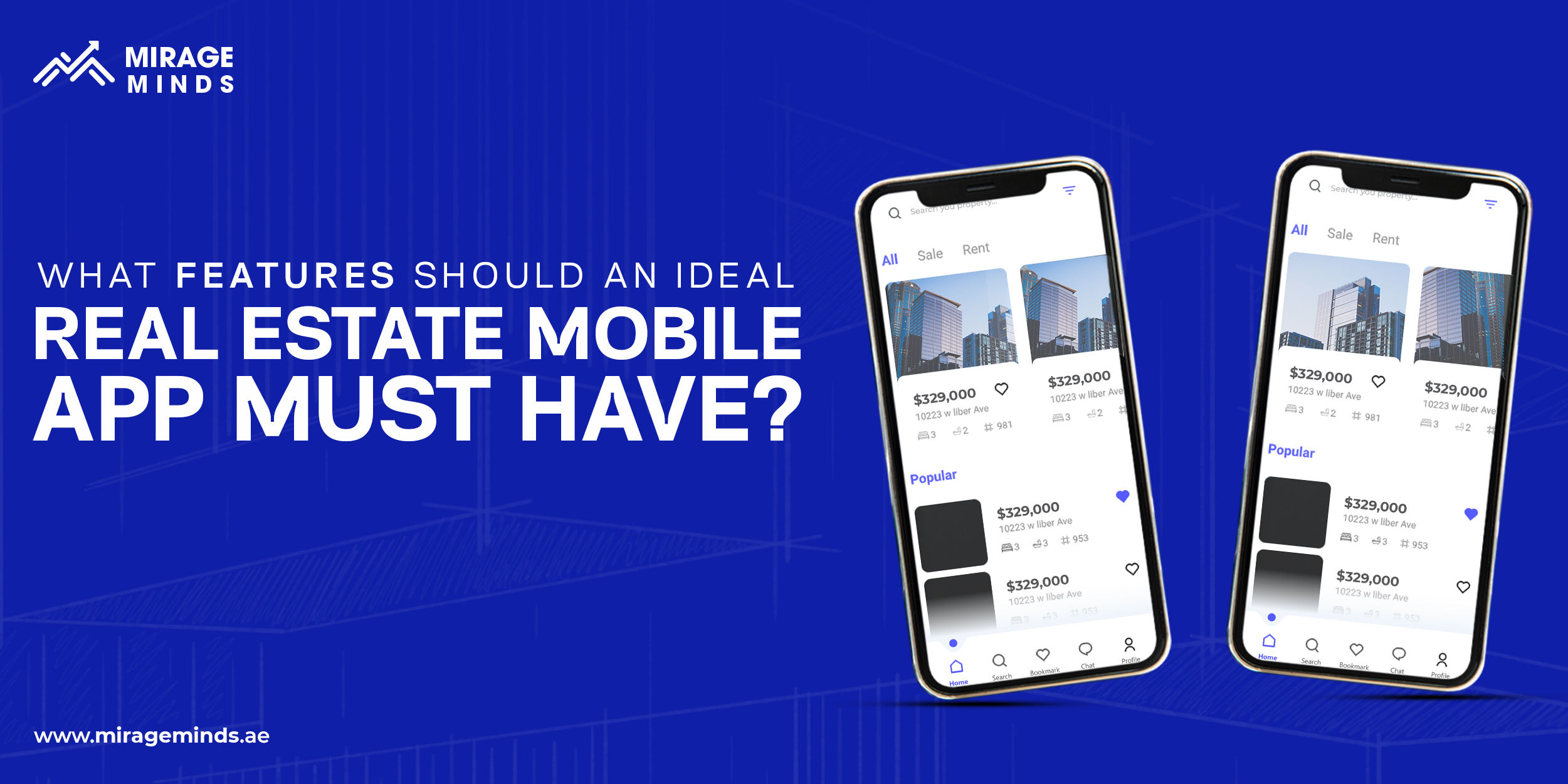
Did you know that every 4th person uses a real estate mobile app to buy, sell, rent, or manage real estate properties?
Real estate property dealers and people searching to sell or buy property can easily jump onto the easy-to-use features of a real estate mobile app.
However, if you want to avoid endless property listings, miss out on the best deals, or need help keeping track of your real estate investments, all these hurdles need one solution, which is a real estate mobile app.
Real estate apps can offer advanced search filters, including location, price range, property type, and amenities.
This helps users quickly find properties that match their criteria, saving them time and effort.
Whether you are a buyer, seller, or investor, this app keeps you in the loop with neighbourhood insights, mortgage rate updates, and a lively community.
Continue perusing this blog to delve deeper into essential features that a real estate app must possess.
Why Does Your Real Estate Business Need A Mobile App?
Real estate businesses have their demands. This business needs searching, listing, and other things that require effort, but the mobile app minimizes the hassle of the property dealers and makes the process easier.
According to the Data, 73% of people use real estate apps on mobiles or tablets to search for properties, and this ratio will increase in the future.
A real estate mobile app is super beneficial for your business to boost your brand’s visibility, credibility, and client engagement.
In this digital age, having a real estate mobile app isn’t just an advantage; staying ahead of the game is necessary.
Moreover, the real estate mobile app also gives your customer the advantage of reading reviews of others interacting with the same property dealer.
12 Features That Real Estate Mobile App Must Have
Using real estate mobile apps simplifies searching for properties, sends instant alerts for new listings, and offers detailed information about properties.
Therefore, we will tell you about 12 amazing features your real estate mobile app must have.
User-Friendly Interface
A user-friendly mobile application is a game changer in the real estate industry. You must have features that are easy to use because this encourages users to explore further.
A User-friendly interface enables customers to explore your real estate mobile app more easily. It is also the best way to multiply your business sales figures.
Additionally, Incorporating reviews into your app enhances transparency and strengthens your reputation. In this way, your business will be capable of attracting more customers and visitors.
Property Search And Filters
Property search and Advanced filters should be the priority when developing a mobile app for your real estate business.
These filters empower users to refine their property search, allowing them to specify criteria such as location, price, and range.
This way, customers can quickly find properties that align with their unique preferences, saving time and effort.
In fact, these property search filters enhance their overall experience, as they can explore listings that are truly relevant to their needs.
Detailed Property Listings
Checking detailed property listings manually is a hassle and makes you exhausted. For example, Each property should have a detailed profile including price, square footage, number of bedrooms and bathrooms, and property type at the top for quick reference.
To improve these property listing details, use high-resolution photos and 360-degree virtual tours or videos to provide a visual representation of the property.
Moreover, highlight key features, such as recent renovations or special characteristics, to inform customers of full details.
User Onboarding (Signup/Login)
User onboarding is the most basic process when using your real estate mobile application. In a real estate mobile app, providing various sign-up and login options can enhance the user experience. Here are several ways you can allow customers to sign up.
- Email and Password:
This is the most common method in which users create an account with email address and password. Customers can easily log in using these credentials.
- Through Social Media:
Allow users to sign up using their social media accounts, such as Facebook, Google, or LinkedIn. This eliminates the need to remember another set of login credentials.
- Phone Number Verification:
The third method is for users can sign up or log in by providing their phone number. A verification code is sent to their phone to confirm their identity.
Above mentioned methods are widely used for real estate mobile apps for sign-up customers.
Integration with Maps
You can only imagine mobile real estate applications with the feature of Maps. These vital links connect users to a wealth of information and services, enhancing their experience.
Your customers can easily track the location through maps. Furthermore, Apps with integrated maps can offer turn-by-turn directions to properties, making it easier for users to attend open houses or property viewings.
In a highly competitive market, they’re the secret sauce that sets your app apart, providing convenience, efficiency, and a comprehensive experience that keeps users returning for more.
Mortgage Calculator
Customers can benefit greatly from adding a mortgage calculator option in a real estate mobile app. Imagine you’ve found a property you need but need clarification on the monthly mortgage payments.
That is where the mortgage calculator works for you. With this feature, customers can estimate their monthly mortgage costs in terms of property price, down payment, interest rate, and loan term.
Consequently, a mortgage calculator makes the real estate business more efficient and transparent. Customers will find their dream home and a sound financial investment.
User Profiles And Favorites
A user’s profile allows the app to personalize their experience. It can remember their search preferences, saved properties, and past interactions with the app.
Prominently, User profiles are closely linked to the “Favorites” or “Saved Properties” feature, where users can bookmark listings they are interested in.
These saved properties are associated with the user’s profile, making it convenient to access and manage their favourite listings.
Interestingly, you can add a feature that helps send notifications or updates about saved properties, such as price reductions or status changes.
Secure Transactions
Customers can benefit significantly from secure transaction features in a real estate mobile app. Here are several possible ways are mentioned below:
Customer Data Protection
Secure transactions safeguard customers’ sensitive data, such as personal information, financial details, and property documents. This feature prevents theft of identity, financial details, and property documents.
Financially Security
Secure payment processing assures the safety of financial transactions such as down payments and fees. Customers can make payments with confidence because they know their funds are secure.
Convenience
Customers benefit from the convenience of completing transactions within your mobile real estate application. It reduces the need for in-person meetings and paperwork. This can save time and effort in the entire process.
Reduced Paperwork
It is the most significant benefit of using a secure transaction feature. It involves digital document sharing and signing, reducing the need for extensive paperwork.
Real-Time Chat and Support
Allow chat feature to answer questions of the customers. This reduces frustration and ensures a smooth user journey.
Moreover, Chat features enable users to communicate in real-time, creating a sense of being acknowledged and appreciated.
It promotes a feeling of connection and involvement with your application and brand.
Your real estate business depends on how you give support to the customers. For example, your customer support agents can offer suggestions and solutions that align with individual user inquiries and preferences, resulting in a personalized and meaningful user experience.
Data Security
User data security should be the top priority of any real estate mobile application. Here are several ways that you can protect the data of users;
- Encrypt sensitive data stored in the user’s mobile, such as login credentials, payment information, and personal details.
- Make sure to incorporate user authentication and authorization measures to safeguard data and restrict certain actions within the application to authorized individuals only.
- To safeguard the information stored on your servers, it is important to take measures such as implementing firewalls and intrusion detection systems and conducting security audits for your server-side infrastructure.
Analytics
The analytics feature in your mobile app can provide several benefits for your real estate business and customers.
- By monitoring the property listings that users frequently view and the ones that generate inquiries or transactions, valuable insights can be obtained regarding property popularity and user preferences.
- The analytics tool in your mobile app not only gives important statistics for your business but also impresses customers by boosting their experience, providing personalized recommendations, and displaying your commitment to meeting their requirements and expectations.
Reviews And Ratings
Here are some ways you can ask for ratings and reviews for your real estate services.
- After a successful transaction, politely ask your clients to leave a review or rate your services. Make it easy for them by sending a follow-up email with a direct link to your review platform.
- Use personalized messages whenever possible. Address users by their names and express gratitude for their usage of the app.
- Send a follow-up email to customers shortly after they have made a purchase or used your services.
- Create a hidden pop-up or dialogue box that appears within the app. This pop-up should kindly ask users for their feedback.
Total Cost Of Creating A Real Estate Mobile App
In today’s rapidly evolving technology landscape, the total cost of creating a mobile app can vary significantly, ranging from approximately 150k AED to 1100k AED or more, depending on various factors.
While simpler apps with basic functionalities will cost low as compared to the apps with highly designed and advanced features.
When budgeting for app development, businesses and entrepreneurs must carefully analyze their app’s specific requirements and objectives to ensure a successful and cost-effective completion.
Read More: The Real Estate App Development Cost in Dubai
Conclusion
In conclusion, With the advent of mobile apps in the digital world, one can now easily navigate and find their needs with the help of search results, which has transformed the world of real estate.
Both real estate professionals and property seekers rely on these apps for convenience, efficiency, and enhanced user experiences.
However, When it comes to buying, selling, or renting real estate properties, the above features collectively empower users to make informed decisions.
As a result, mobile applications simplify the real estate process, making it more efficient and enjoyable for all parties involved.
Furthermore, If you’re considering developing a mobile application for your real estate business, the cost will depend on the complexity and features of the app.
On average, you might expect to invest anywhere from 150,000 AED to 1,100,000 AED or more. As real estate technology continues to evolve, it is clear that mobile apps will play a crucial role in this transformation.
They offer a convenient and efficient way of conducting real estate transactions, making them a must-have tool for any real estate business looking to stay ahead in the digital age.
Hope you enjoy reading this article. And carry lot of information about how beneficial mobile applications could be for real estate.